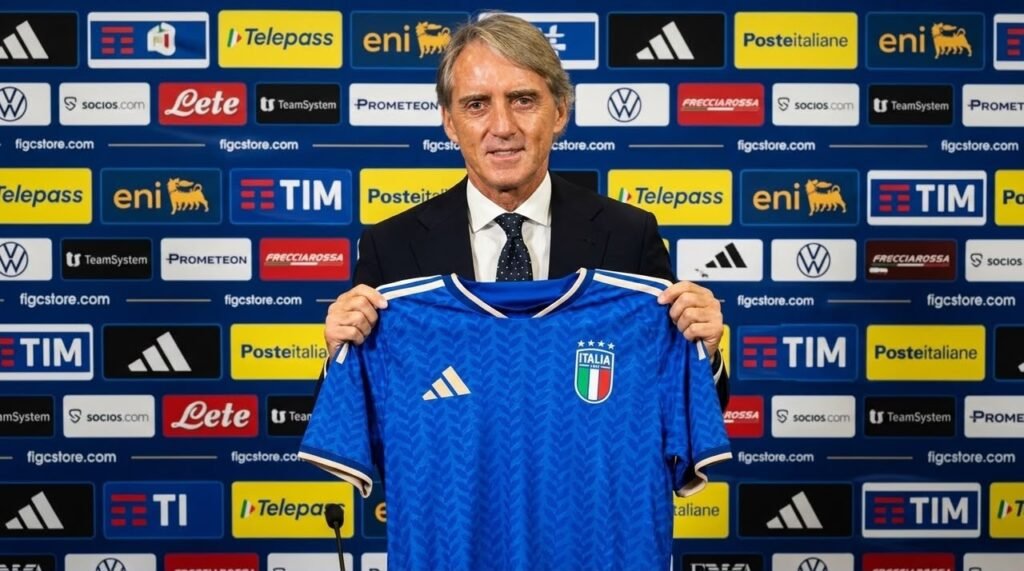
Roberto Mancini Returns to Italy Job as Azzurri Begin Youth-Focused Rebuild
Roberto Mancini is back in charge of Italy, with the returning head coach facing the task of rebuilding the Azzurri after their failure to qualify for a third consecutive World Cup. Mancini, who guided Italy to European Championship glory in 2021, has returned at a difficult moment for the national team. The new era has […]
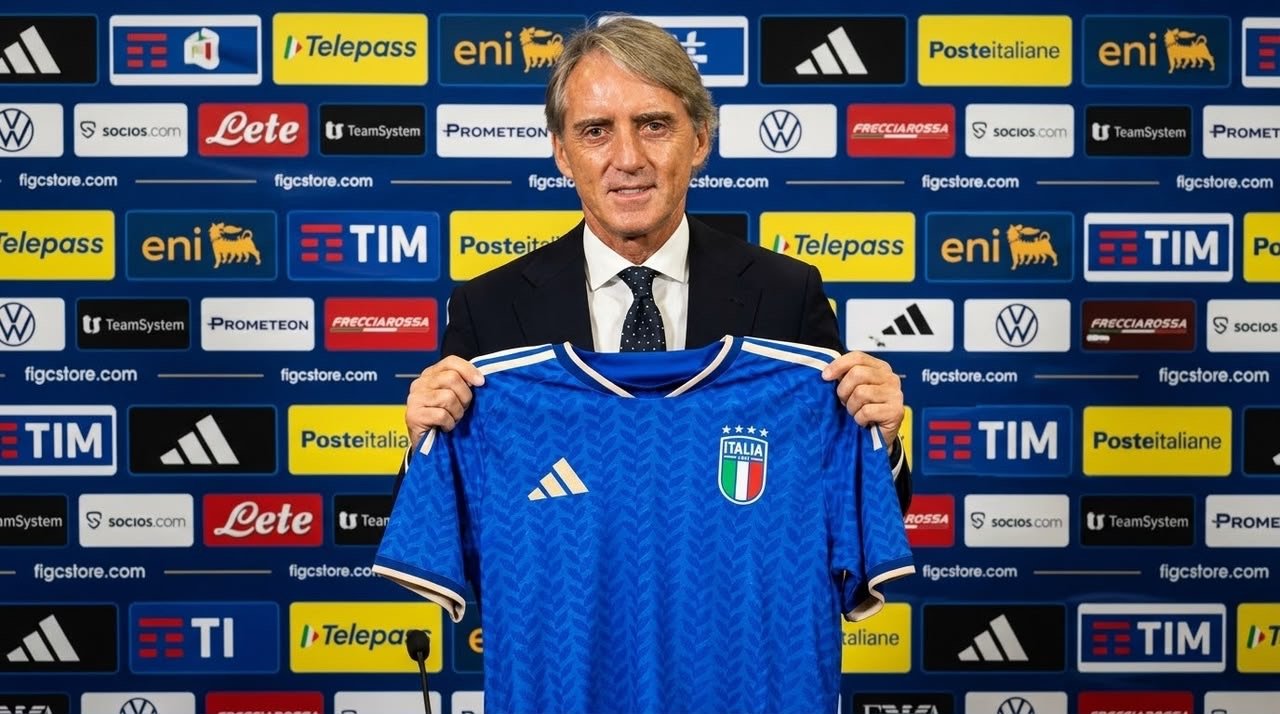
Roberto Mancini is back in charge of Italy, with the returning head coach facing the task of rebuilding the Azzurri after their failure to qualify for a third consecutive World Cup.
Mancini, who guided Italy to European Championship glory in 2021, has returned at a difficult moment for the national team. The new era has already brought a major emphasis on younger players, with nine uncapped footballers included in his first 34-man squad.
Italy Looking to Move Beyond Another World Cup Failure
Italy’s latest World Cup disappointment has intensified concerns about the direction of the national team.
The Azzurri have now missed three successive World Cups despite their historic record of winning the competition four times. The 2021 European Championship success had provided a major boost after the first two qualification failures, but the latest setback has led to another period of change.
Mancini’s return therefore comes with expectations that extend beyond the immediate Nations League fixtures.
Italy captain Gianluigi Donnarumma has acknowledged the disappointment surrounding the national team while stressing that the players must focus on working their way back to where Italy expects to be.
Mancini Puts Young Players at the Centre of His Plans
One of the clearest changes under Mancini is the decision to look closely at a new generation of Italian players.
The first squad of his second spell includes nine players receiving their first senior call-ups: Massimo Pessina, Daniele Ghilardi, Michael Kayode, Eddy Kouadio, Alessandro Romano, Issa Doumbia, Sebastiano Esposito, Antonio Vergara and Mohamed Alì Zoma.
Mancini has explained that the purpose is not simply to make changes for the sake of it. He wants to assess young players at international level and identify those who can become important members of the national team over the coming years.
The approach also reflects the need to increase the pool of Italian talent available to the senior side.
Experience Will Still Have a Role
Although youth is a major part of the new project, Mancini is not planning to completely discard experienced players.
The coach has spoken about creating a squad in which established internationals can help younger teammates settle into senior football. That could allow Italy to combine the experience of players such as Donnarumma with the energy and freedom of the emerging generation.
The balance will be particularly important as Italy enters a demanding Nations League schedule.
A Difficult Start Awaits Mancini
The returning coach will not have much time to experiment.
Italy’s Nations League campaign features four matches in an 11-day period, beginning against Belgium before further meetings with Türkiye and France.
That schedule gives Mancini an immediate opportunity to evaluate his new squad against strong opposition.
The coach has also made clear that he wants Italy to play proactive football rather than simply concentrate on damage limitation. His stated aim is to build a team capable of controlling matches while developing the young players who could form the backbone of the next cycle.
Can Mancini Rebuild Italy Again?
Mancini’s first spell ended with one of the biggest successes in recent Italian football history, as Italy won Euro 2020 at Wembley.
His second spell begins under very different circumstances.
The immediate objective is to restore confidence, introduce new talent and establish a team capable of competing consistently at the highest level. The presence of nine new faces in his first squad indicates that the rebuilding process has already begun.
For Italy, the challenge now is turning that fresh generation into a team capable of ending the cycle of World Cup disappointment.